Hair loss has a way of creeping up on you. One day, it’s a little extra hair on the pillow, and before long, you’re standing in front of the mirror, wondering what happened. For people who’ve already tried shampoos, supplements, and topical treatments without much success, PRP therapy often comes up as the next option worth exploring. But most people don’t really know what it is, how it works, or whether it’s actually worth the time and money.
What PRP Actually Is
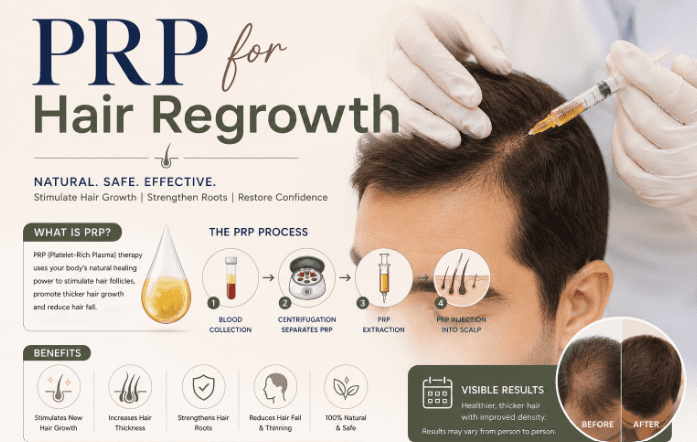
PRP stands for Platelet-Rich Plasma. It’s not a chemical or a synthetic drug — it’s derived from your own blood. The process involves drawing a small amount of blood, spinning it in a centrifuge to separate its components, and then injecting the concentrated platelet-rich portion directly into the scalp.
Platelets are best known for their role in clotting, but they also carry growth factors — proteins that signal the body to repair and regenerate tissue. When injected into the scalp, these growth factors are thought to stimulate dormant hair follicles, improve scalp blood supply, and extend the active growth phase of the hair cycle.
It’s a medical procedure, done in a clinical setting, usually by a dermatologist or trichologist.
How the Procedure Works
A typical PRP session takes about 45 minutes to an hour. Here’s what usually happens:
- Blood is drawn from your arm (typically 20–60 ml)
- It’s placed in a centrifuge that spins for around 10–15 minutes
- The platelet-rich layer is separated from red blood cells
- The PRP is loaded into a syringe and injected into the scalp in multiple small doses
Some doctors apply a numbing cream beforehand to reduce discomfort. The injections are spaced about 1–2 cm apart across thinning areas. Most protocols recommend 3–4 sessions spaced a month apart, followed by maintenance sessions every 6–12 months.
Results aren’t immediate. Most people notice changes in hair thickness and shedding around 3–6 months after starting treatment.
Does PRP Actually Work?
Research on PRP for hair loss is promising but not definitive. Several clinical studies have shown improvements in hair density and thickness, particularly in people with androgenetic alopecia (the most common type of pattern hair loss). However, results vary depending on the quality of the PRP preparation, the technique used, and the individual’s response.
PRP works best when hair follicles are still alive but dormant — not when they’ve completely stopped functioning. That’s why early intervention tends to produce better outcomes. If follicles have been inactive for a long time, PRP may have limited impact.
It’s also worth noting that PRP doesn’t address the underlying hormonal or nutritional causes of hair loss. It supports regrowth, but without addressing the root cause, hair loss can persist or recur.
What It Costs
PRP therapy is not cheap. In India, a single session typically ranges from ₹3,000 to ₹10,000 depending on the clinic, city, and doctor’s expertise. A standard course of 3–4 sessions can cost anywhere between ₹12,000 and ₹40,000.
Maintenance sessions add to the long-term expense. Insurance usually doesn’t cover it because it’s considered a cosmetic procedure.
Before committing, it’s worth doing a proper scalp and hair assessment. Understanding whether your hair loss is hormonal, nutritional, stress-related, or structural helps determine whether PRP alone is appropriate or just one piece of a larger treatment plan.
Who Should Consider It (And Who Shouldn’t)
PRP tends to work well for people with:
- Early to moderate androgenetic alopecia
- Diffuse thinning rather than complete bald patches
- Active but weakened follicles that need stimulation
It’s generally not recommended for people with:
- Blood disorders or platelet dysfunction
- Active scalp infections or inflammation
- Very advanced hair loss with no follicular activity
People with conditions like alopecia areata may also respond differently — some benefit, others don’t.
If you’re trying to understand the full picture before booking a session, reading more about what prp hair treatment actually involves medically — not just the procedure but the science, suitability, and expected outcomes — is a solid starting point. Traya’s approach of combining internal health with external treatment reflects the broader truth: PRP works best as part of a comprehensive plan, not as a standalone fix.
Final Thoughts
PRP for hair regrowth is a legitimate clinical option with real evidence behind it — but it’s not a magic solution. It works best when the follicles still have potential, when the procedure is done correctly, and when it’s combined with a treatment plan that actually addresses why the hair loss started in the first place. Before spending on sessions, invest time in understanding your hair loss type. That clarity will make any treatment — including PRP — far more effective..